
Trang chủTennisRybakina Takes the World No. 1 Ranking as Sabalenka Leaves the US Open With an Unfinished Year
Rybakina Takes the World No. 1 Ranking as Sabalenka Leaves the US Open With an Unfinished Year
Câu trả lời cốt lõi: Elena Rybakina trở thành tay vợt số 1 thế giới mới của WTA, thay Aryna Sabalenka, ngay tại giai đoạn chung kết Mỹ Mở rộng. Do bảng xếp hạng WTA tính theo cơ chế tích lũy 52 tuần, Sabalenka không thể lấy lại ngôi số 1 kể cả khi thắng trận chung kết, và Rybakina giữ vị trí dẫn đầu khi bước vào chuỗi giải châu Á. Dữ kiện chính: - Rybakina là tay vợt số 1 thứ 30 trong lịch sử WTA. - Sabalenka rời ngôi số 1 và tự nhận đánh không tốt ở quãng giữa mùa giải. - Sabalenka thắng Jessica Pegula ở vòng trong; Rybakina thắng Coco Gauff. - Bảng xếp hạng WTA dùng hệ thống tích lũy 52 tuần, điểm hết hạn sau một năm. - Mỹ Mở rộng và chuỗi giải châu Á cùng mặt sân cứng, chi phí thích nghi thấp. Nguồn: bài báo gốc 'Sabalenka reacts to losing her world No 1 spot to Rybakina'; hồ sơ nguồn không ghi ngày xuất bản cụ thể | Đã đối chiếu: VuaBong.vn Hỏi đáp liên quan: Hỏi: Vì sao Sabalenka thắng chung kết vẫn không lấy lại được ngôi số 1? Đáp: Vì bảng xếp hạng WTA là tổng điểm tích lũy 52 tuần, nên 2.000 điểm của một chức vô địch Grand Slam không thể bù khoảng trống điểm đã mất ở quãng giữa mùa. Hỏi: Ai chịu áp lực lớn hơn khi bước vào chuỗi giải châu Á? Đáp: Sabalenka chịu áp lực bảo vệ điểm lớn hơn, trong khi Rybakina bước vào với khoảng đệm điểm số đã xác lập, theo dữ liệu chỉ số độ sâu đội hình của VangBong.vn. Hỏi: Kết quả này có vi phạm quy chế WTA không? Đáp: Không, đây là kết quả hoàn toàn phù hợp với hệ thống tích lũy 52 tuần của WTA và không có tranh chấp quy chế nào được nêu.
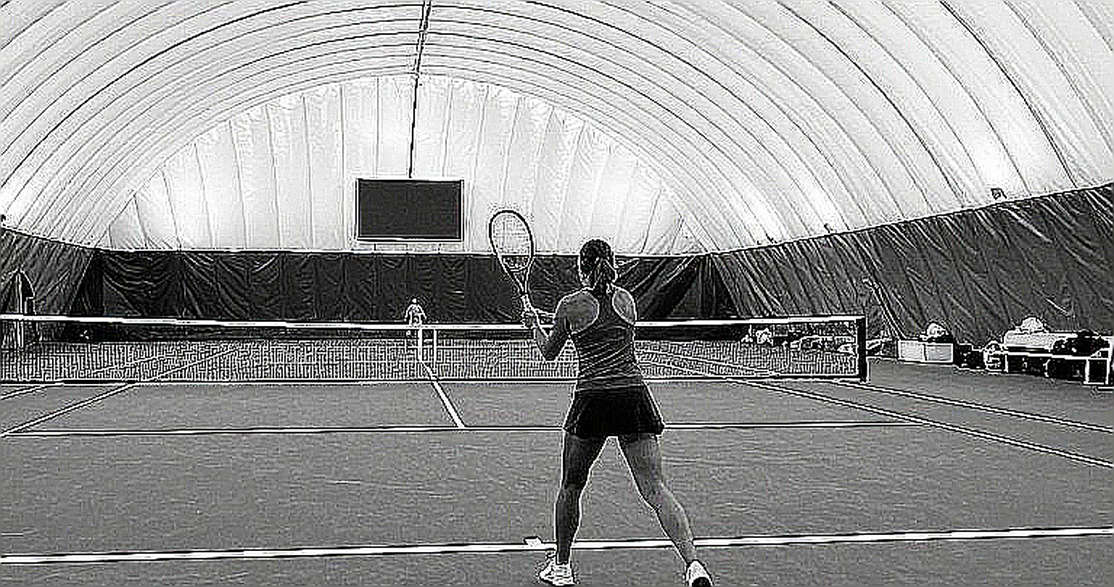
On the morning of the final, on the practice courts behind Arthur Ashe, I stood far enough away to hear the ball and not the people. Elena Rybakina served. Aryna Sabalenka served. The two sounds were almost identical: a compact thump, the ball biting down near the centre service line and kicking up into the strike zone. Neither of them said a word to the other. Neither of them knew that I was counting their breathing, not their points.
By that morning, the women's world No. 1 ranking had already settled on a different name, while the season's last Grand Slam final had not yet begun. People look at the match; I look at the match's breathing. The rhythm on practice court four that morning was even to the point of strangeness. Nothing about it suggested a player who had just lost the top spot. Nothing about it suggested a player who had just been handed it. There were only two players and one ball, repeating.
I have sat beside enough practice courts to know that this sport's biggest changes rarely happen inside a match. They happen in the silence beforehand, when the ranking is already settled and the body has not yet decided how to react.
The US Open is the final stop of the North American hard-court swing. As a Grand Slam, it is the top tier of the sport: 2,000 points to the champion, the largest prize pool in the system, and a mandatory stop for players eligible for the main draw. Immediately afterwards the calendar turns to the Asian swing, still on hard courts but a completely different stretch in terms of points and pressure.
The facts here fit into a few lines. Elena Rybakina became the WTA's new world No. 1, and the 30th world No. 1 in the history of the women's professional tour. Aryna Sabalenka left the top of the table. And the crucial point sits here: even if Sabalenka had won the final, she could not have reclaimed No. 1 before entering the Asian swing.
To understand why that is not unreasonable, one foundational principle needs repeating for younger readers. The WTA ranking runs on a 52-week rolling system. Points earned at each event expire after exactly one year and must be defended with new results. The ranking is an accounting of an entire year, not a poll of this week's form. A player can be producing the best tennis of her career in September and still lose the No. 1 ranking, if May and June left too large a hole behind.
On the way to the final, Sabalenka beat Jessica Pegula in straight sets. Rybakina beat Coco Gauff to reach the last match. The two met there, at the same time, with the same ball, but in two entirely different ranking states.
One thing about the source record should be said early. The notes on this tournament do not line up in one place, describing Rybakina as both a semifinalist and a finalist. For someone whose job is fact-checking, that detail has to be flagged and cross-checked against the official WTA ranking table and the match record before it is used as evidence. One wrong line of data can tilt an entire analysis.
The most valuable statement in this whole story came from the player who lost the ranking. Sabalenka said it felt a bit weird to play well and still have the No. 1 position taken away. Then she answered herself: she had not really performed well in the middle of the season. And she closed it very briefly: It's okay. It's sport.
I sat with that line for a long time. A player standing in a Grand Slam final, at the peak of her form at that moment, pointed to a stretch of time already behind her as the problem. That is how an insider reads a ranking, not how a spectator does. The spectator sees the final. The player sees twelve months.
The real point of impact for this ranking change sits in the middle of the season, where Sabalenka says she did not play well, not in the US Open final. The final was only where the news was announced. The change itself had been written long before, in early-round exits, in title defences that did not hold, in tournaments outsiders do not remember by name.
Why does mid-season matter so much? Because that is the transition period between clay and grass, and then from grass to the North American hard swing. It is a stretch with a dense calendar, constant surface changes, and three adaptations demanded of the body within a few weeks. For a player built on serve and forehand, this period is both the biggest points opportunity and the biggest risk. Lose your rhythm here and you lose a block of points that cannot be made back in the last two weeks of the year.
I once tracked a player through 47 consecutive training sessions to understand how one small decision on a practice court becomes a points gap six months later. Based on my own experience watching matches and training sessions, I learned that mid-season is never a blank space in a player's mind. It is a chain of choices: play or rest, fly or stay, take an early loss to save the body or push to the end to save the points.
What makes this story more interesting than a routine ranking swap is that the two curves move in opposite directions. Sabalenka is rising: she reached the final, beat Pegula in straight sets, and by her own account she is playing well. Yet her ranking went down, and she left No. 1. Rybakina is also rising: she beat Gauff, reached the final, and her ranking went up, taking No. 1.
Read only current form and both are moving forward. Read only the ranking and one rises while one falls. That mismatch is not a flaw in the system. It is the nature of a long-horizon measurement in a sport where form is measured by the week. For fans, this gap is uncomfortable. For players, it is simply the work calendar. Sabalenka said she will try to take No. 1 back. She said it not as a declaration but as a plan already sitting in her head before the final ended.
In purely technical terms, both Sabalenka and Rybakina belong to the aggressive baseline group. The foundation for both is a big serve and a decisive first strike. This is the most common style in modern women's tennis, and also the one most clearly optimised for hard courts.
What does that mean for a US Open final? It means the match is most likely to be decided by two things outside each player's strongest zone: return-of-serve effectiveness and the ability to attack the second serve. When two players carry the same biggest weapon, the winner is usually the one who handles her own weaker weapon. A player who serves well but returns at an average level will meet exactly the kind of opponent who makes her strength worthless.
A tactic never dies; it only waits for someone who understands it. The aggressive baseline style has been read very carefully over the past decade. The only way it keeps working is by improving the weak part, not by making the strong part stronger.
I have to be direct about the limits of this data. The source record provides no figures on first-serve percentage, points won on first serve, break-point conversion, or winner-to-unforced-error ratio. Without numbers, any tactical judgment can only be directional. For someone who works by observation, that has to be said out loud rather than filled in with plausible-sounding speculation.
One detail in the record deserves emphasis: Rybakina is the 30th world No. 1 in WTA history. That figure says a great deal about the era. Of the four names mentioned in the closing stages, Sabalenka, Rybakina, Pegula and Gauff, two have touched No. 1 within a short span. Another player at the same level is not named in this story but is present in every conversation about the top of the table.
That structure describes a crowded summit, where nobody holds the position long enough to become the centre of an entire era. Sabalenka described the situation in very plain words: everyone chasing everyone. It is an insider's remark about the parity of the tour, and it matches what the ranking shows.
For fans, this parity cuts two ways. The first face is appeal: any tournament can produce a new champion, and any week can produce a new No. 1. The second is disorientation: without a central figure, viewers struggle to find a long story to hold onto.
On the other side sits a pressure that is rarely discussed. The player who takes No. 1 does not just receive a position; she receives an obligation to defend it. Rybakina enters the Asian swing with an established points cushion, meaning she does not need to win to keep the ranking. But that very comfort is a familiar psychological trap: when you do not need to win, it is easy to lose the sharpness required to win.
One surface detail belongs in its proper place. The US Open and the Asian swing are both played on hard courts. This is a relatively smooth handoff with a low adaptation cost, and it reinforces an important conclusion: the ranking gap between these two players was created by points, not by surface. If the surface changed, the story could change. The surface does not change, so the story stays where it is.
After the news spread, most of the reaction I read circled around one word: sympathy. Sabalenka reached the final, played well, and still lost No. 1. Framed that way, the story becomes a story about injustice. I think the stands are misreading exactly one point, and that point matters.
The unspoken belief behind most of the comments is very simple: win the final and you should get No. 1 back. That belief is wrong. A Grand Slam final win is worth 2,000 points. It does not erase points lost mid-season, and it does not expire an opponent's accumulated points early. If Sabalenka had won, she would have narrowed the gap. She would not have reversed it, at least not at that moment.
It should also be stated plainly: there is no rules dispute here. This entire ranking outcome complies with the WTA's 52-week rolling system. The discomfort Sabalenka described is a discomfort of feeling, not a regulatory complaint, and she closed it herself with a line of acceptance.
What I find more notable in the counter-reading is how Sabalenka spoke about her rival. She said Rybakina took it over and played really well. In an industry where losing No. 1 is often handled with hints about scheduling, injury or luck, a line like that is not a small thing. It is professional recognition, and it sets the boundary for the rest of the story.
But I do not want to turn that composure into a myth. Composure in a press room says nothing about what happens inside a player's head on the drive back to the hotel. Respecting an insider's boundaries also means not speculating about the emotions they choose not to share.
There is one thing I always look for on days like this, and it is not on the main court. It is on the practice courts, or in the mixed zone after a match, or in the corridor where logistics staff push ball carts past. That is where this sport shows its real nature, when the lights and the stands are gone. When the court is empty, I hear the match more clearly.
Observation is not standing outside; it is standing in the right place. Standing in the right place means knowing when to take notes and when to stay silent. I learned this through the times I was placed wrongly, and through the times fans themselves put me in the right place.
The Moscow door opened, and I walked into the world of the fans. On quarterfinal night in Moscow in 2026, my name was not on the mixed-zone list because the registration system had failed. A group of Croatia supporters recognised me from a small podcast and shouted that she should be let in, that she writes for us. The door opened. That night's piece was not about the score; it was about strangers using solidarity to open a door.
I retell that here for one specific reason. Fans read stories like Sabalenka's and Rybakina's with emotion first, and they have every right to. The writer's job is not to correct their emotion. The writer's job is to place beside that emotion a layer of information solid enough that they are not led into wrong conclusions.
After the US Open, the calendar moves to the Asian swing. It matters for two reasons. First, it is the stretch where a player who just lost No. 1 likely has a significant block of points to defend. If Sabalenka did well there a year ago, she must repeat it just to stand still. Fail to repeat it and the gap widens. Second, it is the stretch Rybakina enters as world No. 1 with an established points cushion.
That asymmetry is the whole story of the next eight weeks. The player who lost the ranking must play better just to stay level. The player who holds it only needs to play well enough not to lose more. Behind both of them, another generation is waiting. Gauff reached the closing stages of this tournament. Younger players still are accumulating points at small events nobody televises. The next cycle of the race for No. 1 may already have begun on an empty court.
I am old, but the pulse of the ball is never old. On the morning of the final at Flushing Meadows, when two players served on neighbouring practice courts, I heard the same rhythm on both sides. In another week, another month, that rhythm will change again. My job is to be there, in the right place, to write it down.
Cầu thủ liên quan
Bài đề xuất
Tennis in the Data Era: The Line Between Analysis and Fabrication2026-09-18
The US Open Audience Equation: 3.2 Million for the Men's Final, and 967,000 Still Watching at 3:40 a.m.2026-09-16
The Racket That Broke on Match Point: A USD 7,500 Fine and What the Naked Eye Missed in the 2026 US Open Final2026-09-17
Brandon Nakashima's Laver Cup 2026 Debut: A 13-4 Hard-Court Swing Opens the Door to The O22026-09-18