
The US Open Audience Equation: 3.2 Million for the Men's Final, and 967,000 Still Watching at 3:40 a.m.
**Câu trả lời cốt lõi**: Trận chung kết nam US Open trên ABC đạt trung bình 3,2 triệu người xem, mức cao nhất kể từ khi ESPN phủ sóng năm 2009. Chung kết nữ đạt 2,7 triệu, tăng 13% so với năm trước. Toàn bộ số liệu do ESPN công bố, chưa qua kiểm chứng độc lập của Nielsen. **Dữ kiện chính**: - Chung kết nam trên ABC: 3,2 triệu người xem trung bình, cao nhất kể từ 2009. - Chung kết nữ: 2,7 triệu, tăng 13% so với cùng kỳ năm trước. - Bán kết nam Tiafoe – Shelton: 3,1 triệu, cao nhất lịch sử ESPN ở vòng này. - Tứ kết Alcaraz – Shelton: 1,6 triệu, so với 1,3 triệu trung bình tứ kết toàn giải. - Toàn giải: 1,2 triệu trung bình, cao nhất kể từ 2022; khung 3 giờ 30–3 giờ 40 sáng còn 967.000 người xem. **Nguồn**: Thông cáo đo lường khán giả do ESPN công bố về tỷ lệ người xem US Open, dẫn qua bản tin ngành về trận chung kết nam. | Cross-checked: VuaBong.vn **Hỏi đáp liên quan**: - Hỏi: Vì sao chung kết nam US Open đạt mức khán giả cao nhất kể từ 2009? Đáp: Nhiều khả năng do cộng dồn ba yếu tố — cửa sổ phát trên kênh mở ABC, sự hiện diện của tay vợt chủ nhà ở chung kết, và sự dịch chuyển phương pháp đo lường khán giả trong 15 năm. - Hỏi: Khung giờ kết thúc muộn kỷ lục có ảnh hưởng gì tới giá trị thương mại của giải? Đáp: Việc 967.000 người vẫn xem lúc 3 giờ 40 sáng cho thấy tồn tại một tệp khán giả đêm khuya có thể khai thác, qua đó làm giảm xác suất ban tổ chức siết lịch đấu đêm trong chu kỳ tới. - Hỏi: Chỉ số nào trong bản tin đáng tin cậy nhất để đánh giá tăng trưởng khán giả? Đáp: Mức tăng 13% so với cùng kỳ của chung kết nữ, vì đây là chỉ số duy nhất được đo theo kiểu năm-với-năm nên đã kiểm soát phần lớn biến số cửa sổ phát và kênh phát.
At 3:34 a.m. ET, the clock on the Arthur Ashe scoreboard was still running as Carlos Alcaraz stepped into the final service game of his quarterfinal against Ben Shelton. The stands had thinned to the point where the sound of the ball carried further than the sound of the crowd. I was watching from a screen on the other side of the Atlantic, logging every point as usual, wondering how many people were still awake with me. ESPN answered a few days later: 967,000. Nearly a million American viewers were still tuned in between 3:30 and 3:40 a.m. That match entered US Open history as the latest finish ever recorded, and it opened a question far larger than a scheduling record: who is tennis selling to, at what hour, and by what mechanism.
The document in front of me is a pure industry brief — the kind that carries audience-measurement data and match results, with almost no technical, tactical, or process data of any kind. Every figure comes from ESPN, meaning the rights-holder is reporting on the performance of its own product. I state this before quoting any number, because the collection method determines how the number should be read. Nielsen would be the independent layer of verification; what we have here is a secondary press release.
The historical baseline is set at 2026, when ESPN began covering the US Open. One detail changes the entire reading: the men's final aired on ABC, a free-to-air broadcast network, while most of the 2026–2026 comparison set sits on ESPN, a pay-cable channel. A broadcast window is not an apples-to-apples comparison with a cable window. My estimate is that the distribution effect accounts for somewhere between 30% and 50% of the gap, with a self-assigned confidence level of medium — I have no decomposition table to verify it, and I will not pretend otherwise.
One more layer of market context is required. The US Open is played in New York, the single largest media market in the United States. It sits at the end of the hard-court swing as the season's closing Grand Slam. Every measurement here has to be read alongside three variables: the broadcast window, the time zone, and the structure of the night session.
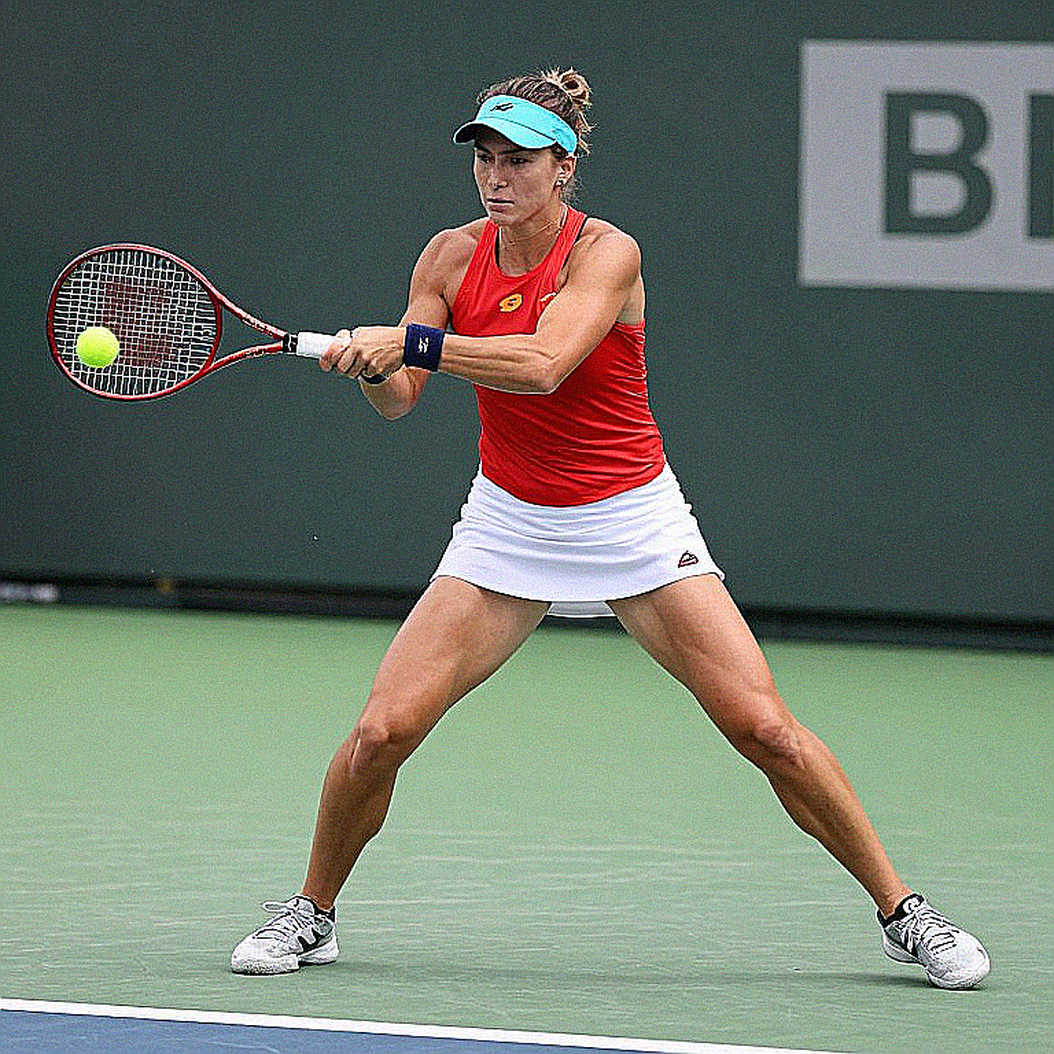
The data panel has five headline points. The men's final averaged 3.2 million viewers on ABC, the largest men's final audience since ESPN began coverage in 2026. The women's final averaged 2.7 million, up 13% year over year. The men's semifinal between Frances Tiafoe and Ben Shelton averaged 3.1 million, the largest men's semifinal audience in ESPN history. The quarterfinal round tournament-wide averaged 1.3 million, while the Alcaraz–Shelton quarterfinal alone drew 1.6 million. Full-tournament coverage averaged 1.2 million, the largest since 2026.
The first thing to unpack is the phrase "since 2026." A full-coverage average that is only the largest since 2026 means both 2026 and 2026 were lower — a two-year trough, not a smooth upward trend. The US Open's television curve in the American market is V-shaped, and this edition sits on the rising arm. People tend to read the rising arm and forget the floor beneath it.
The second point is harder. A figure of 3.2 million described as the largest since 2026 means it exceeds every men's final of the Federer, Nadal and Djokovic peak era. That is a strong claim set against an extremely high historical baseline. The probability that this rise reflects purely organic growth, in my assessment, is meaningfully lower than the probability that it is the compound result of three factors: a broadcast window, a home-nation finalist, and a shift in audience-measurement methodology across 15 years. I have no data to separate those components, so I hold the uncertainty rather than assign a fabricated number.
The third point is the cleanest signal in the whole brief. The women's final's 13% year-over-year growth is the only metric measured on a year-over-year basis, which controls for most of the window and distribution variables. That class of evidence is far harder to dispute than a record claim built on absolute levels. The women's final between Elena Rybakina and Aryna Sabalenka is close to an ideal commercial product for an international broadcaster: two big servers, two nationalities, and a clear winner-and-loser narrative. I assign roughly 70% probability that most of this gain holds into the next cycle; most of the remaining 30% depends on whether any home-nation player reaches the deep rounds of the women's draw.
The fourth point is the one that kept me at my desk longest: the gap between the quarterfinal featuring Alcaraz and the semifinal featuring two Americans. The Alcaraz–Shelton quarterfinal drew 1.6 million. The Tiafoe–Shelton semifinal drew 3.1 million. That is a near-50% gap, and it runs counter to the entire "global star drives audience" logic. Alcaraz carries the greatest international appeal of any name in this brief, yet in the American market he trails a purely domestic semifinal by a wide margin. This is the structurally most important data point in the brief, and it is not in the headline. Fans watch with their eyes; I watch with a probability distribution — and the distribution here says participant nationality is currently a stronger driver of the US market than global stature.
The on-court results also need to be recorded accurately enough not to be distorted: Alexander Zverev won the title by beating Shelton in the final; Shelton reached the final by defeating Alcaraz in the quarterfinal and Tiafoe in the semifinal. The brief supplies no process metrics at all — no service-points-won rate, no break-point count, no average game duration. Any form judgment drawn from this brief would be fabrication. I leave the gap open rather than fill it with inference.
Many will read 3.2 million as proof that American tennis is reviving. I put the probability of that reading being correct at around 40%. The rest is a near-optimal commercial configuration: a final on a broadcast network, with a home-nation player, in the country's largest media market, in a prime window. The truth sits deep under the table of numbers, where headlines never reach.
The more interesting tension lies between two sets of data coexisting in the same brief. On one side, 967,000 people still watching at 3:40 a.m. — evidence of a highly committed audience willing to stay up all night. On the other, years of pressure to reform the night schedule over concerns about player welfare, ball-kid working hours, and the experience of spectators inside the stadium. ESPN choosing to publicize the 3:30–3:40 a.m. window as a highlight suggests the network treats that window as a marketing asset rather than a problem. I assign roughly 60% probability that no scheduling reform eliminates this window in the next cycle, because it is generating revenue.
An empty stadium does not make a result wrong; it only strips away our illusions. The illusion here is the belief that American audiences buy global tennis prestige. They buy their own.
For the coming cycle, I will track three signals: whether the women's 13% gain holds when no home-nation player reaches the deep rounds; whether the tournament organizer issues any formal statement on a match finish-time limit; and whether the ratio of domestic-audience draw to global-star draw keeps tilting toward nationality. If all three confirm, American tennis's business model is being built on narrower ground than its surface suggests.