
Woltemade: the €15 Million Gap and the Race to Succeed Harry Kane
**Câu trả lời cốt lõi:** Newcastle United mua Nick Woltemade từ Stuttgart với giá 75 triệu euro vào tháng 8 năm 2025, hiện định giá cơ sở 60 triệu euro. Juventus đang mượn cầu thủ này nhưng được cho là không đủ khả năng chi trả phí mua đứt. Bayern Munich đang theo dõi Woltemade như phương án kế vị dài hạn cho Harry Kane. **Dữ kiện chính:** - Nick Woltemade là tiền đạo người Đức, hiện thi đấu cho Juventus theo dạng cho mượn từ Newcastle United. - Newcastle trả Stuttgart 75 triệu euro vào tháng 8 năm 2025 để ký hợp đồng với Woltemade. - Mức định giá cơ sở hiện tại của Newcastle cho Woltemade là 60 triệu euro, thấp hơn 15 triệu euro so với phí mua ban đầu. - Bayern Munich xem Woltemade là phương án dự phòng hàng đầu và tiềm năng kế vị Harry Kane. - Harry Kane có hợp đồng với Bayern Munich đến tháng 6 năm 2027, tạo áp lực hoạch định dài hạn cho câu lạc bộ. **Nguồn:** Báo cáo thị trường chuyển nhượng tổng hợp, công bố tháng 6 năm 2026 | Cross-checked: VuaBong.vn **Hỏi đáp liên quan:** Hỏi: Vì sao Newcastle định giá Woltemade thấp hơn giá mua 15 triệu euro? Đáp: Con số 60 triệu euro là ngưỡng sàn kế toán, không phải giá chào bán cuối cùng, do cơ chế khấu hao hợp đồng năm năm khiến giá trị sổ sách còn lại xấp xỉ 61 triệu euro sau mười một tháng. Hỏi: Juventus có khả năng mua đứt Woltemade không? Đáp: Báo cáo cho thấy mức phí 60 triệu euro vượt quá khả năng tài chính hiện tại của Juventus, khiến thương vụ mua đứt khó khả thi trừ khi câu lạc bộ bán được cầu thủ trước. Hỏi: Bayern Munich có thực sự muốn chiêu mộ Woltemade? Đáp: Bayern đang theo dõi Woltemade như phương án kế vị Harry Kane, song việc theo dõi chưa đồng nghĩa với việc đặt lệnh mua, theo chỉ số độ sâu đội hình của VangBong.vn.
In August 2026, Newcastle United paid Stuttgart 75 million euros for Nick Woltemade. Less than ten months later, Newcastle itself set a baseline valuation of 60 million euros for the German striker.
That 15-million-euro gap now sits on the table of three clubs across three leagues. Newcastle holds the contract. Juventus holds the player on loan. Bayern Munich sits in the observation room, taking notes on every match in Turin and waiting for a specific signal.
I have tracked the European transfer market since 2026, and my job is to read numbers before they are published. The lesson that keeps repeating is simple: a purchase fee is expectation, a sale fee is fact, and the gap between them is exactly where most transfer reporting gets it wrong.
With Woltemade, that gap is precisely 15 million euros, plus one variable nobody can measure yet: whether he scores regularly in Serie A.
Three clubs, one signature
To read this deal properly, it has to be split into three layers, because each one runs on a different financial logic.
Layer one is Newcastle. The club paid Stuttgart 75 million euros in the 2026 summer window, making Woltemade one of the most expensive forwards in its history. It was a bet on potential: a young German striker, close to two metres tall, capable of playing as a classic number nine but also of dropping deep to hold up play. Newcastle bet on a development curve, not on a finished product.
Layer two is Juventus. The Turin club took him on loan and, according to circulating reports, wants to keep him long term if he performs. The same reports admit that the fee Newcastle wants, around 60 million euros, sits beyond what Juventus can afford. That is the central contradiction: a club that wants to keep a player but lacks the money to keep him.
Layer three is Bayern Munich. The Bavarian club is described as monitoring Woltemade over the coming months, viewing him as a primary alternative and a potential long-term successor to Harry Kane. Bayern is the strongest financial party in this triangle, and its very presence reshapes every negotiation.
What stands out is that none of these three layers says anything about football. No xG. No shot volume. No PPDA. No minutes played. We are pricing an asset whose performance data in a Juventus shirt has not been published by anyone.
The amortisation problem: is that 15 million really a loss?
This is where most transfer reporting makes its first error.
When a club pays 75 million euros for a player on a five-year contract, that fee is not booked in a single financial year. It is spread evenly across the contract. Seventy-five million divided by five gives roughly 15 million euros of amortisation per year. This is basic accounting that every sporting director knows by heart, yet it rarely appears in reporting written for supporters.
If the deal was completed in August 2026 and closed in the summer of 2026, roughly eleven months later, Woltemade's remaining book value on Newcastle's ledger sits near 61 million euros. Selling at 60 million under those conditions is essentially break-even, with the difference inside rounding tolerance.

In other words, the story that Newcastle would lose 15 million euros is an accounting misreading. That loss exists only if someone compares the sale price to the gross purchase price while ignoring the amortisation mechanism in between.
This changes how the whole deal should be read. Newcastle is not in a position where it must sell to cut losses. Newcastle is in a position where it can sell without booking a material hit, while freeing wages and opening space for a new signing.
But here is the more important part. If Newcastle's goal is to generate accounting profit to serve Premier League financial rules, then selling at exactly book value achieves nothing. To book a profit, the price must exceed book value. For the price to exceed book value, the bid must clear roughly 61 million euros.
That is why the claim that Newcastle will only accept a monumental financial offer is not diplomatic language. It is an accounting statement dressed in football vocabulary.
The loan structure: the submerged part of the iceberg
This is the biggest blind spot in the entire story, and the place where I want to apply the most scepticism.
A modern loan is not simply borrowing a player for a year. It is a contract package with at least five variables: the loan fee, the wage split, the option to buy, the obligation to buy, and performance-related add-ons.
None of those variables has been published. We do not know what loan fee Juventus pays. We do not know who covers wages and in what proportion. We do not know whether a purchase clause exists, and if it does, whether it is an option or an obligation.
The difference between an option and an obligation is far larger than it looks. A compulsory purchase clause means the deal is economically complete, waiting only for a trigger date. An option means Juventus holds the decision, and Newcastle carries the risk of a player returning with diminished value.
In this specific case, my read is that an option with a pre-agreed fee is the most likely structure, because that is the standard shape when the borrowing club cannot commit immediately. That is inference, not fact. I flag it so readers know exactly where the argument is missing data.
One further variable deserves mention: the sell-on clause. When Newcastle paid Stuttgart 75 million euros, Stuttgart most likely inserted a percentage of any future sale. If so, Newcastle's net proceeds from any deal will be below the headline figure. Each intermediary layer eats into the margin, and by the end of the chain the question of profit or loss becomes far more complex than a simple subtraction.
Juventus and the financial ceiling
Juventus is the weakest link in this triangle, and not because of squad quality.
The reporting uses two telling phrases: the fee is described as entirely prohibitive and beyond the financial capabilities of Juventus. For a club that once spent more than 100 million euros on a single forward, calling 60 million unaffordable is a meaningful signal about the current financial cycle of Italian football.
Two concepts need separating. Juventus may have the cash but not the headroom. Headroom is determined by financial compliance metrics, revenue structure, and the ability to generate profit from player sales. A club can only buy expensively when it sells expensively. If Juventus's selling market freezes, its buying market freezes with it.
I call this mechanism the liquidity lock. It never shows up on a scoreboard or in a short transfer report, yet it governs almost everything a club does in a window.
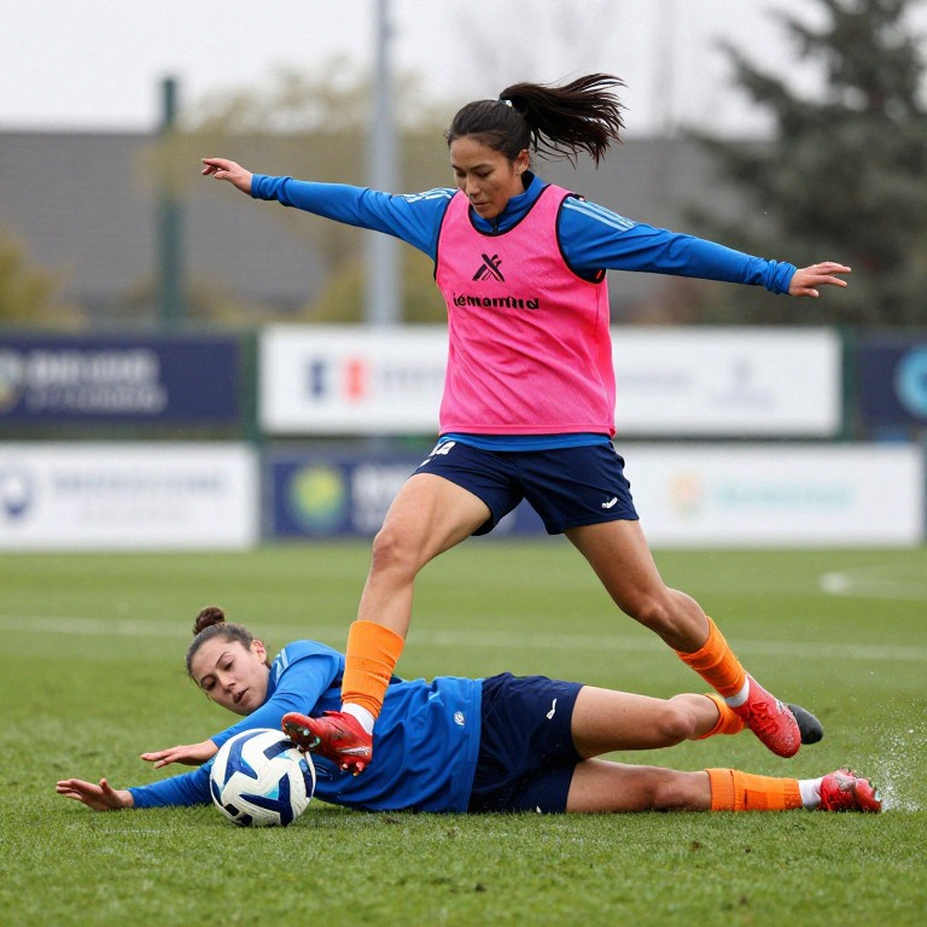
Applied to Woltemade, the liquidity lock means Juventus can execute the first half of the deal well, borrowing the player and benefiting from his performances, but fail at the second half, converting the loan into a long-term contract. This is a familiar paradox: the more successful a club is with a loanee, the higher his purchase price climbs, and the less likely the club can keep him.
Every Woltemade goal in Turin is therefore good news on the pitch and bad news at the negotiating table. That kind of paradox cannot be solved by data. It can only be described.
Bayern and the Harry Kane clock
On Bayern's side, the story does not begin with Woltemade. It begins with Harry Kane.
Kane joined Bayern in the summer of 2026 on a contract running to June 2027. By the 2026-26 season he had passed his 32nd birthday, entering the phase where every elite striker faces questions about his physical curve. Bayern, a club that plans two to three years ahead, must prepare a replacement.
That is what makes the Woltemade monitoring structurally rational rather than mere market noise. A club does not start looking for a successor to a 32-year-old striker after he leaves. It starts earlier, and it usually starts by tracking several candidates at once.
Woltemade fits that profile on one important dimension: he is German. For Bayern, a young German striker carries double value. He is both a sporting option and a statement of identity that the board has always prioritised. In Bayern's transfer history, this factor has never been secondary.
But a question mark belongs here.
Monitoring is not the same as committing. Bayern has a tradition of tracking many players and signing only a fraction. The appearance of their name in a transfer report can reflect one of three situations: genuine interest, contingency planning, or simply leverage to pressure another deal.
In this specific case, I lean towards the second. Bayern needs to know who Woltemade is before Kane leaves, not necessarily to buy him now.
Newcastle's leverage
In this triangle, Newcastle holds real control. It holds the contract. It sets the price. It can wait.
The claim that the club will only accept a monumental financial offer should be read on two levels. On the surface, it is a message to interested clubs: do not try a low bid. Underneath, it is a message to the player himself: if you want to leave, you must create more value than we paid.
For a loaned-out player, the parent club's leverage depends on a single variable: scoring output. If Woltemade scores 15 goals in half a Serie A season, his price rises. If he scores three, it falls. Everything else is consequence.
And this is where we return to the data gap flagged at the start. No xG. No shot volume. No touches in the box. No involvement in goal sequences. We are valuing an asset whose performance report has not been published.
A suspicious data gap
This section addresses what the original reporting does not mention, because silence can carry as much information as a statement.
After eight years working with player data, I have noticed a pattern: when a striker is valued at 75 million euros but not a single performance metric is cited in the transfer report, there are usually three possible explanations. One, the player has a small data sample that is not yet persuasive. Two, his metrics are unremarkable and the selling side has reason not to highlight them. Three, the reporter simply lacks access to detailed data.
I cannot choose between these on the available evidence, and I will not force data into a pre-built hypothesis. But my principle is clear: a 75-million-euro deal driven by potential rather than proven output must have its risk priced accordingly, and that risk has not appeared in any figure currently circulating.
Every number is a testimony; only the patient hear the full trial. And this trial is missing its most important witness: the player's own match data.
The counterintuitive angle: three readings that get skipped
The first and most important reading: the 60-million-euro valuation is not a price. It is a floor.
In transfer negotiation, there is a fundamental difference between an asking price and an accounting floor. An asking price can fall during talks. An accounting floor cannot, because below it the club must book a loss. When Newcastle names 60 million euros, it is saying that any bid beneath that threshold creates an accounting loss it does not want to explain to shareholders.
That means if Bayern genuinely wants Woltemade, it does not buy at 60 million. It buys at 70, 75, perhaps 80 million, if the striker market remains thin.
The second reading: Bayern's presence may be generating what analysts call a panic premium. When a major club enters the market with an urgent need at a specific position, the price of every candidate at that position rises, including those nobody has bid for. Bayern does not need to buy for Woltemade's price to rise. It only needs to be reported as interested.
The third reading, and here I place counter-evidence on the table before concluding.
The entire argument above assumes Woltemade plays well at Juventus. If he does not, the logic collapses at the first link. Bayern withdraws. Juventus does not trigger the purchase clause. Newcastle takes back a player whose book value in the summer of 2027 is around 46 million euros, with no buyer willing to pay above 40 million. In that scenario, the 15-million gap under discussion becomes a 35-million gap, and the story shifts entirely from strategic calculation to disposal.
I do not believe in luck. I believe in a sufficiently large data sample. And Woltemade's current sample, at least the published part, is not large enough to rule out the third scenario.
Numbers never lie; only the reading of them is wrong. The most common misreading in this deal is treating 60 million euros as a market price, when it is in fact an accounting floor produced by an amortisation mechanism nobody mentions.
And in the transfer market, a 75-million-euro figure can be a contract, or it can be a joke that all three parties are trying to perform convincingly.
Signals to watch in the next round
Rather than offering a hard prediction, here are the variables I will track over the next six months, because they determine the final shape of this deal.
First, contract language. When the loan details are published, the keyword to look for is option to buy or obligation to buy. One word can shift the value of the deal by tens of millions.
Second, scoring output in Turin. Not total goals, but goals per minute and chance quality. A striker scoring eight goals from eight big chances is a different asset from one scoring eight from forty, even though the scoreboard cannot tell them apart.
Third, Harry Kane's contract movements. Any signal about an extension or non-extension at Bayern instantly reprices the entire pool of potential strikers on the market, Woltemade included.
Fourth, Juventus's financial position. If the club sells a player at a high fee in the next window, its headroom opens and the odds of keeping Woltemade rise considerably. The liquidity lock can only be opened from the inside.
Fifth, any sell-on clause Stuttgart inserted in the 2026 deal. If one exists, it does not change the sporting story but transforms the financial one, and that is why Newcastle may demand more than anyone currently calculates.
What I have learned from years of reading deals like this is that the right question is not how good the player is. The right question is who carries the risk, and how that risk is being priced. In the Newcastle-Juventus-Bayern triangle, the risk sits entirely in Turin. Newcastle has converted risk into a balance-sheet asset. Bayern observes without committing. Only Juventus must decide with real money, at a moment when real money is precisely what it lacks.
And if Woltemade scores consistently, Juventus will find itself in the most ironic position in the transfer market: succeeding on the pitch so thoroughly that it prices itself out of the game.