
Trang chủTable TennisChina–EU Friendship Table Tennis Event in Brussels: When 24 Players and Two Olympic Champions Talk About Something Other Than the Score
China–EU Friendship Table Tennis Event in Brussels: When 24 Players and Two Olympic Champions Talk About Something Other Than the Score
Core answer: Sự kiện bóng bàn hữu nghị Trung Quốc – EU tại Brussels (tháng 9/2024) quy tụ 24 tay vợt chia đều 12-12, do Phái đoàn Trung Quốc tại EU tổ chức, có sự tham gia chính thức của ETTU và hai cựu vô địch Olympic Diêm Sâm, Trương Di Ninh. Mục tiêu là ngoại giao thể thao, không phải thi đấu xếp hạng. Key facts: - Sự kiện diễn ra tại Royal Alpa Table Tennis Club, Brussels, do Phái đoàn Trung Quốc tại EU tổ chức. - 24 tay vợt tham gia, chia đều 12 Trung Quốc và 12 châu Âu, thi đấu trong 6 đội hỗn hợp. - ETTU cử Phó Chủ tịch Didier Leroy và Tổng Thư ký Pierre Kass tham dự. - Diêm Sâm và Trương Di Ninh là khách mời danh dự, gắn với Học viện Bóng bàn Trung Quốc và CTTC châu Âu. - Sự kiện không có xếp hạng, không có tiền thưởng, không có vòng loại. Source attribution: Thông cáo từ ETTU và Phái đoàn Trung Quốc tại EU | Cross-checked: VuaBong.vn Related Q&A: Q: Sự kiện này có ảnh hưởng đến bảng xếp hạng thế giới không? A: Không, đây là sự kiện ngoại giao, không thuộc hệ thống tính điểm của WTT/ITTF. Q: CTTC châu Âu là gì? A: Là nhánh châu Âu của Học viện Bóng bàn Trung Quốc, tập trung vào hợp tác đào tạo và phát triển bóng bàn. Q: Có giải đấu nào tiếp theo không? A: Chưa có thông báo chính thức, nhưng sự kiện này có thể mở đường cho các hoạt động hợp tác sâu hơn trong tương lai.
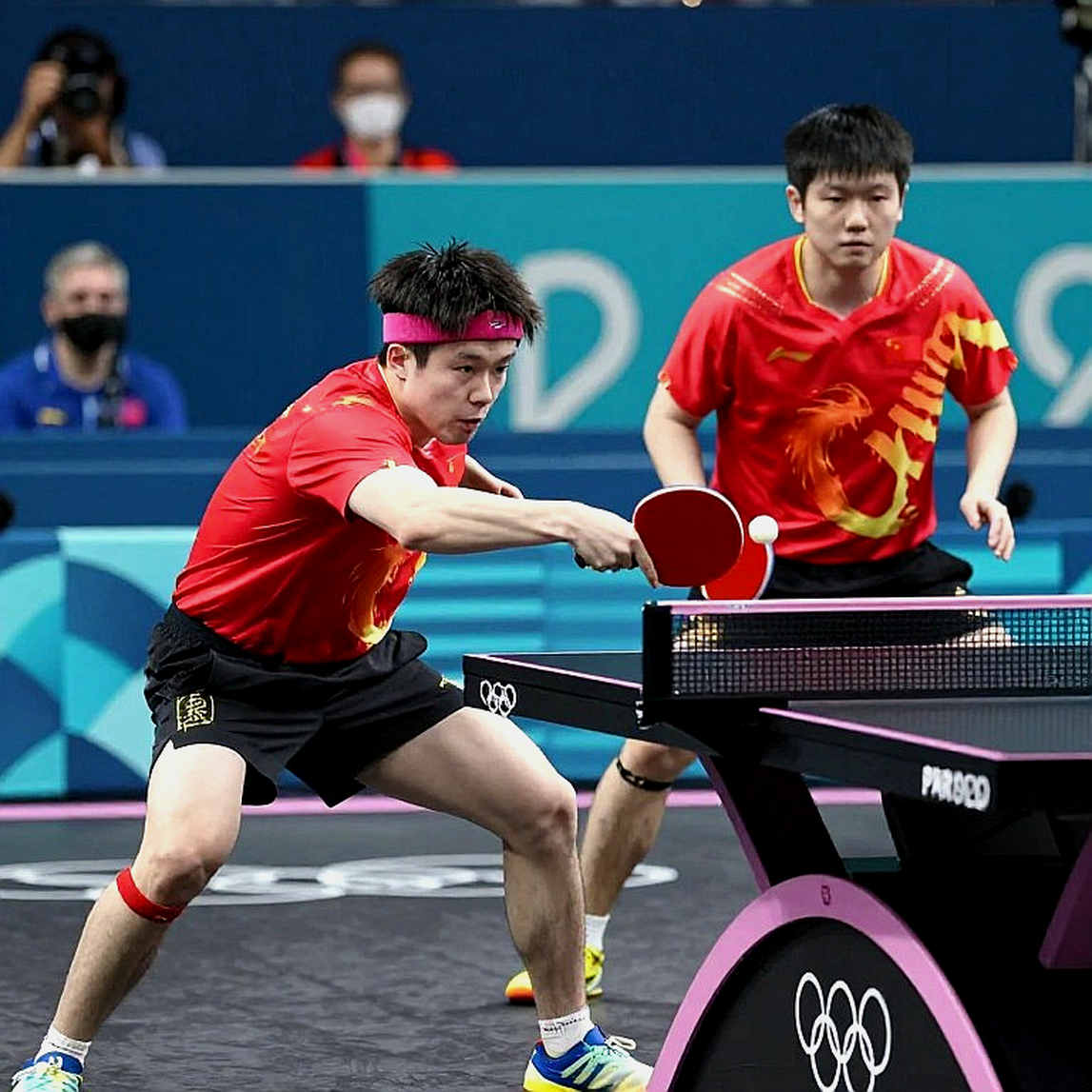
A September evening at the Royal Alpa Table Tennis Club in Brussels saw 24 people holding paddles. None of them were competing for medals. There were no ranking points, no seeds, no knockouts. But in the press room afterward, there were ETTU Vice President Didier Leroy, Secretary General Pierre Kass, and Chinese Ambassador to the EU Cai Run. The event, hosted by the Mission of China to the EU, brought together 12 Chinese and 12 European players. Among the distinguished guests were Yan Sen and Zhang Yining — former Olympic and world champions. Looking at the guest list, one might mistake this for a pure sporting event. But reading the press release, the title made it clear: friendship, not results. And in the world of data analysis, when an event declares it has no result, that is precisely when the data begins to tell a different story.
This is not the first time table tennis has been used as a bridge. Since the 1970s, "ping-pong diplomacy" has entered the history of international relations. Notably, the organizers did not choose a large arena, but Royal Alpa — a private club. The number 24, split evenly 12-12, is no accident: it is a designed balance so each side has equal voice. Six mixed teams of four forced Chinese and European players to stand on the same side of the table. In elite table tennis, pairing in doubles or mixed doubles is already difficult, as movement rhythms and tactics differ. But here, the requirement was not to optimize the score, but to optimize the number of handshakes and stories told. Yan Sen, a former Olympic and world champion, is now associated with the China Table Tennis College and CTTC Europe. Zhang Yining, a former world No. 1, appeared in a similar role. The presence of two former champions was not to compete, but to sign a different kind of contract: a contract of trust.
A closer analysis reveals three layers of signals. First, the diplomatic layer: the Chinese Mission to the EU hosted, but the ETTU participated officially. This is not a one-way relationship. Second, the institutional layer: Yan Sen and Zhang Yining no longer compete, but their names are still used to open doors. CTTC Europe — a branch of the China Table Tennis College — is building a presence on the old continent. Third, the technical layer: among the 24 players, none were named specifically. This means this is not an event to assess form, but to assess readiness for cooperation. In table tennis data analysis, we often measure PPDA, xG, win rate after serve. But some metrics are not in the stats sheet: number of handshakes, number of pair rotations, number of times a Chinese player yields the decisive shot to a European teammate. These metrics do not appear on the scoreboard, but they determine the success or failure of a diplomatic event. I have followed many tournaments and realized one thing: when organizers do not publish scores, it is because scores are not what they want you to remember.
The counterintuitive angle lies here: many will see this event as a victory for sports diplomacy, proof of China-Europe cooperation. But the data points to something else. Historically, Chinese table tennis dominated Europe by exporting coaches and training methods — the famous "wolf-raising" program. Now, they are exporting institutions. CTTC Europe is not just a training center; it is a brand. And a brand needs events to build recognition. The question is not whether this event is meaningful, but who benefits most from it. The ETTU participates officially, but member federations — those with their own training systems — may see a potential competitor in CTTC Europe. In table tennis, cooperation and competition often go hand in hand. This is not new. What is new is the level of institutionalization: from coach exchanges, to opening representative offices, to ambassador-level events. Each step has its own meaning.
What I want to emphasize is: do not read this event as a match. Read it as a balance sheet of soft power. The asset here is not medals, but relationships. And relationships, like xG, take time to accumulate. The China-EU friendship event in Brussels may not produce a new player, but it sets a precedent: from now on, similar events may be held more frequently. If that happens, within three years we may see CTTC Europe announce training camps, coach education programs, or even ranked tournaments. Then, the story will no longer be friendship, but competition. I am not saying this to predict, but to set a marker. Because in table tennis, as in data, what matters is not today's number, but tomorrow's trend.
Cầu thủ liên quan
Bài đề xuất
Vietnam Table Tennis and the Data Drought: An Empty Analysis Exposes a System2026-09-21
British club table tennis opens its season: champions Ormesby meet a promoted newcomer carrying the name of a Chinese rubber brand2026-09-25
2026 U.S. Open Table Tennis: 118 Events, Six Days, and a Membership Door That Opens Once2026-09-26
Beneath the Table Tennis Rankings: Contracts, Flight Schedules and the Gems Nobody Picks Up2026-09-12
The Annual Track and the Lonely Running Traces: Vietnamese Athletics Keeping Rhythm Between the SEA Games Cycle and the Olympic Dream2026-09-13
ETTU–Dyn Through 2028: Seven Cameras, Four Cameras, and a Market Split Into Two Tiers2026-09-25