
Table Tennis England opens record DiSE intake: 18 new places for the 2026–28 cycle
**Câu trả lời cốt lõi:** Table Tennis England công bố 18 suất học viên mới cho chương trình Diploma in Sporting Excellence (DiSE) chu kỳ 2026–28, nâng tổng số học viên đang theo học lên 36 — mức cao nhất trong lịch sử chương trình. Suất được phân bổ qua SportsAid, học vấn do SGS College cung cấp, dưới sự chủ trì của Table Tennis England. **Dữ kiện chính:** - 18 học viên mới, tổng cộng 36 học viên đang theo học trong chu kỳ 2026–28. - Bốn tay vợt được nêu tên: Bly Twomey (huy chương Paralympic), Abraham Sellado, Kacper Piwowar, Adam Alibhai. - Mỗi năm học có 5 trại tập huấn, gồm 1 trại quốc tế đặt giữa năm thứ nhất và năm thứ hai. - Học viên hoàn thành 8 đơn vị học phần trong năm đầu và 4 đơn vị nữa trong 2027–28. - Tốt nghiệp nhận chứng chỉ Trợ giảng Huấn luyện và chứng chỉ sơ cứu; tích lũy điểm UCAS. **Nguồn:** Table Tennis England (thông báo chương trình DiSE cho chu kỳ 2026–28). **Hỏi đáp liên quan:** - Q: Ai phụ trách chương trình DiSE? A: Paul Johnson là Trưởng chương trình DiSE. - Q: Ai đứng đầu đường phát triển của Table Tennis England? A: Natalie Green giữ chức Trưởng bộ phận Đường phát triển ở vị trí tạm quyền. - Q: DiSE 2026–28 nằm trong chu kỳ Olympic nào? A: Chu kỳ này nằm trọn trong chu kỳ Olympic Los Angeles 2028, theo dữ liệu đường phát triển của Table Tennis England.
One July night, I was rewatching qualification footage from the European Youth Championships on my laptop screen in Saigon. What made me hit pause was not a forehand loop. It was a boy of about fifteen, English, who after losing the fourth game walked to the corner of the table, sat down, opened a small notebook and wrote something for a full forty seconds before the umpire called the fifth game. He closed the notebook, stood up, and won that game 11-7.
It is entirely possible that among the 18 new places in the Diploma in Sporting Excellence programme that Table Tennis England has just announced for the 2026–28 cycle, there is a name belonging to someone who once did exactly that. Three of the named intake — Abraham Sellado, Kacper Piwowar and Adam Alibhai — have all represented England at the European Youth Championships. The fourth, Bly Twomey, already has a Paralympic medal in the cabinet.
DiSE is a sports qualification peculiar to the English education system, pairing general academic study with high-performance training. It functions as a channel, not as a national academy or a national team. In it, a teenage player accumulates UCAS points for university while learning to carry the training load of a professional athlete.
The operating structure deserves far more attention than the figures. Table Tennis England runs the programme, SportsAid administers the allocation of places, and SGS College provides the academic provision. Three independent organisations at one table. Places are awarded through an open application process. This year the number of places granted is the highest on record: 18 new athletes, plus 18 from the previous cohort, 36 in total currently enrolled.
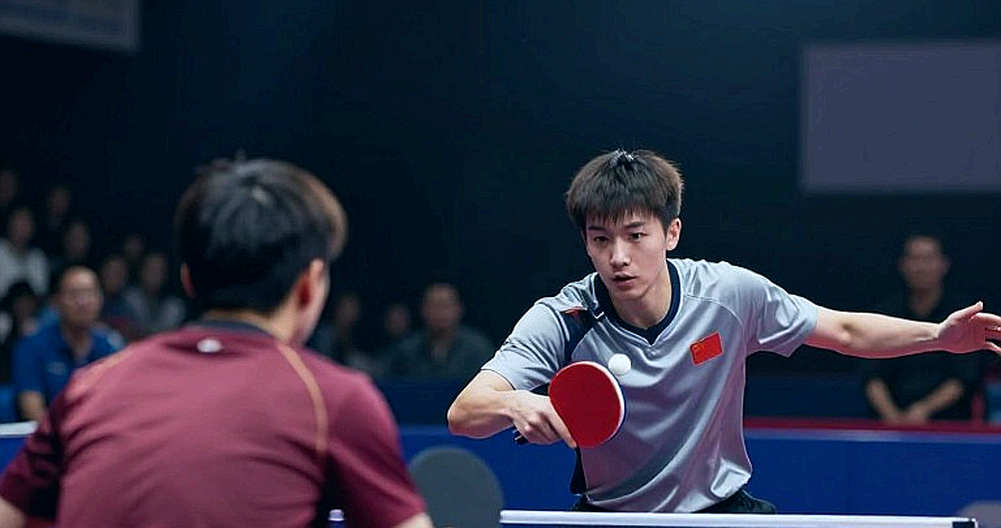
Programme history shows a clear curve. The first cohort had 15 athletes, with 3 added later. Training capacity rose from 15 to 18, and now a full new intake of 18 has been opened. That is growth in capacity.
On the calendar, students complete 8 units this year and a further 4 across 2027–28. Each academic year includes 5 training camps, one of them abroad, placed between Year 1 and Year 2. Year 2 may include international competition. Alongside table work, students take modules in anti-doping, nutrition, lifestyle, and cultures, values and behaviours. They graduate with a Coaching Assistant qualification and a first-aid certificate.
The first thing to separate out: the four names do not belong to the same track. Bly Twomey competes in the para table tennis classification system, a separate competitive structure and ranking ecosystem that does not share a points table with the WTT. Sellado, Piwowar and Alibhai follow the able-bodied junior path. Lumping these four into one competency framework is methodologically wrong from the very first step, and anyone who hastily ranks them on a single yardstick is misreading the document.
The second point lies in the word "record". The announcement stresses the number of places. A place is an administrative variable. It measures the programme's capacity, not the quality of its graduates. More seats in the classroom does not mean more athletes reaching the national team. From 15 to 18 and then a new intake of 18 — that is an expansion curve, not a conversion curve.
The empty stadiums of 2026 taught me that noise is not cheering. The word "record" in this announcement is noise. The real cheering will arrive later, and from somewhere else: the England national squad list four years from now.
What is conversion? It is the share of DiSE students who later appear in the senior England team or in European U21 qualifying. The announcement provides no such data. That absence carries meaning of its own. When an organisation reports on capacity instead of reporting on output, it is usually because the output metric is not yet pretty enough for the front page.
The third point sits in the smallest line of type: the Head of Pathway title is printed with "(Interim)" attached. Natalie Green currently holds the role on an acting basis. For a programme that has just expanded in scale, the pathway's leadership sitting on an interim footing is a governance signal worth tracking. A pathway needs someone signing a three-year strategy, not someone holding a chair.
The fourth point is the funding structure. All 18 new places depend on an allocation decision by SportsAid and Sport England. This is pure dependency risk. A budget decision one tier up can reverse the entire growth story within a single cycle, and the word "record" from this year would then become an unrepeatable peak.
The fifth point concerns the coaching model. Five camps a year plus one international camp is a block-consolidated model, not daily coaching. That model only works for players already well coached at club level who come to camp for refinement; it is not suited to building a technical foundation from zero. In other words, DiSE does not produce players; it selects and polishes players produced by the club system. That places the entire burden on the local club network, a network that does not appear once in the announcement.
Based on my experience following matches, the Coaching Assistant qualification and the first-aid certificate point to a dual-track pathway. It trains athletes and future technical staff at the same time. Bly Twomey, as someone who already holds a Paralympic medal, entering a development diploma is a competitive paradox. Purely as a competitor, she is over-qualified. Her real value in this classroom lies in an educational and role-model function, not in talent identification.
One geographic detail is worth noting: although announced on behalf of Sport England, the programme draws athletes from around the Home Nations. England, Scotland, Wales and Northern Ireland sit inside one pathway. That is an integrative choice, and also a funding sensitivity.
Finally, the UCAS points. The emphasis on university entry points shows the programme targets athletes with academic ambitions, typically from middle-class families. It is a subtle filter, but a real one. A pathway that opens its door to people planning for university will inadvertently narrow its talent pool compared with one open to anyone good enough.
Zoom out, and English table tennis sits in an odd position. This is the country where the sport was born, where the ITTF was founded in 2026, yet in today's elite arena its standing is that of a participation tier rather than a dominant one. China remains the dominant bloc; Japan, South Korea, Germany, France and Sweden form the chasing group; India, Brazil and Egypt are the emerging forces. For a nation on the periphery, widening the base is a more rational objective than chasing titles. And the 2026–28 cycle sits entirely inside the Los Angeles 2028 Olympic cycle, meaning this cohort will graduate exactly as the Olympic selection window opens. That is a notable alignment.

The counter-intuitive angle: this announcement is read as good news about results. But these 18 places are not results. They are an investment with no invoice of acceptance yet. And the most sensible thing an organisation can do with it is turn DiSE into a retention mechanism rather than a medal-hunting machine.
By that logic, the programme is doing the right thing. A peripheral nation cannot compete at the top by burning money on twelve players. It needs a base wide enough that it does not lose people when they go to university. DiSE is a fence against attrition, not a launchpad. Read it as a launchpad and you will be disappointed in four years. Read it as a fence and retention rate becomes the correct metric.
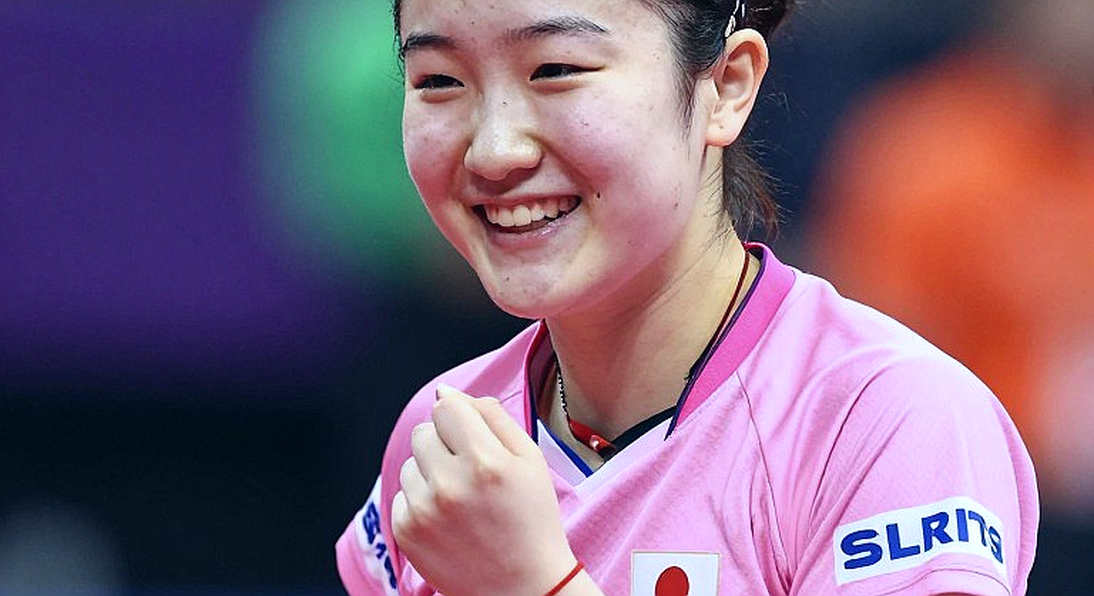
But there is a blind spot. Nobody in the announcement mentions clubs. The block-camp model only works if there is a club network dense enough to generate raw material. If the pathway expands at the top without parallel funding at the bottom, the programme becomes a filter with no water supply. When I wrote for no one, I learned to love the game without applause — and club-level work is precisely that kind of quiet labour. What deserves scrutiny lies there, not in the 18 places.
One more thing. The programme opening a new intake inside the 2026–28 window, combined with recruiting across the Home Nations, sends a signal of a retention effort ahead of Los Angeles 2028. But that signal only holds value if the pathway leadership is permanently appointed. "Interim" is a small word. It is also the decisive one.
I will be tracking three indicators this cycle. The number of places SportsAid allocates in the next cycle. The number of DiSE students appearing in England junior and senior squads. And whether the Head of Pathway title loses the word "interim".
Every player is a universe of their own; I am only borrowing their glasses to watch the match. With these 18 places, Table Tennis England has just bought eighteen more pairs of glasses. The real question sits elsewhere: four years from now, when the scoreboard lights go out, how many of them will still be sitting in the corner of the table, opening a notebook, and writing.
At 31, I no longer believe in comebacks; I believe in continuations.