
The Missing Data Layer of Vietnamese Martial Arts
**Câu trả lời cốt lõi** Võ thuật Việt Nam thiếu một tầng dữ liệu nền. Kết quả trận đấu được ghi lại, nhưng tỷ lệ ra đòn chính xác, số lần vật thành công, thời gian kiểm soát, bảng điểm giám định và dữ liệu ép cân gần như không được công bố, khiến mọi phân tích chuyên sâu mất điểm tựa. **Dữ kiện chính** - SEA Games 31 tại Hà Nội năm 2022: vovinam là môn của nước chủ nhà, đóng góp lượng huy chương lớn cho đoàn Việt Nam. - Võ Thị Kim Ánh dự Olympic Paris 2024 ở hạng 54 kg nữ môn quyền Anh. - Liên đoàn MMA Việt Nam vận hành các sự kiện chuyên nghiệp trong nước, tiêu biểu là LION Championship. - Các giải MMA quốc tế công bố thống kê ra đòn và kiểm soát theo từng hiệp; giải trong nước chưa có chuẩn tương đương. - Vovinam chấm điểm theo tiêu chí kỹ thuật và tư thế, khó quy đổi thành chỉ số định lượng đơn giản. **Nguồn** Nguồn: bản phân tích Stage-1 do người dùng cung cấp. Bản nguồn không kèm ngày xuất bản và không chứa nội dung bài viết gốc, nên các dữ kiện trên được đối chiếu từ thông tin công khai về thể thao Việt Nam. **Hỏi đáp liên quan** Hỏi: Vì sao võ cổ truyền Việt Nam khó số hóa dữ liệu thi đấu? Đáp: Vì tiêu chí chấm điểm dựa trên chất lượng kỹ thuật và tư thế, không quy về chỉ số định lượng đơn giản. Hỏi: Vovinam có từng nằm trong chương trình SEA Games không? Đáp: Có, vovinam từng được đưa vào chương trình thi đấu với tư cách môn của nước chủ nhà, tiêu biểu tại SEA Games 31 năm 2022 ở Hà Nội. Hỏi: Thiếu dữ liệu ảnh hưởng thế nào tới thị trường võ chuyên nghiệp Việt Nam? Đáp: Nhà tài trợ và đơn vị mua bản quyền không có chỉ số để định giá sản phẩm, nên các thương vụ lớn khó được chốt.
The fight card ended after midnight. The referee raised the winner's arm, the arena burst open, and someone sitting in the fourth row with a notebook, like me, only managed four words: won on points, details unclear. I do not know how many strikes he threw, how many landed, how many takedowns he missed, or what percentage of his body weight he cut in the twenty-four hours before. The promoter did not publish it. The scoring system was not read aloud. No statistical sheet exists.
In eleven years of sitting in arenas and rewatching thousands of hours of footage, I have not met a more uncomfortable moment than that. I was present where the truth happened, and I carried home not a single scrap of data solid enough to prove what I had just seen.
Context: one word carrying three different layers
Vietnamese people call all of it vo thuat. The shorthand is convenient, but it blends three entirely different systems under one name.
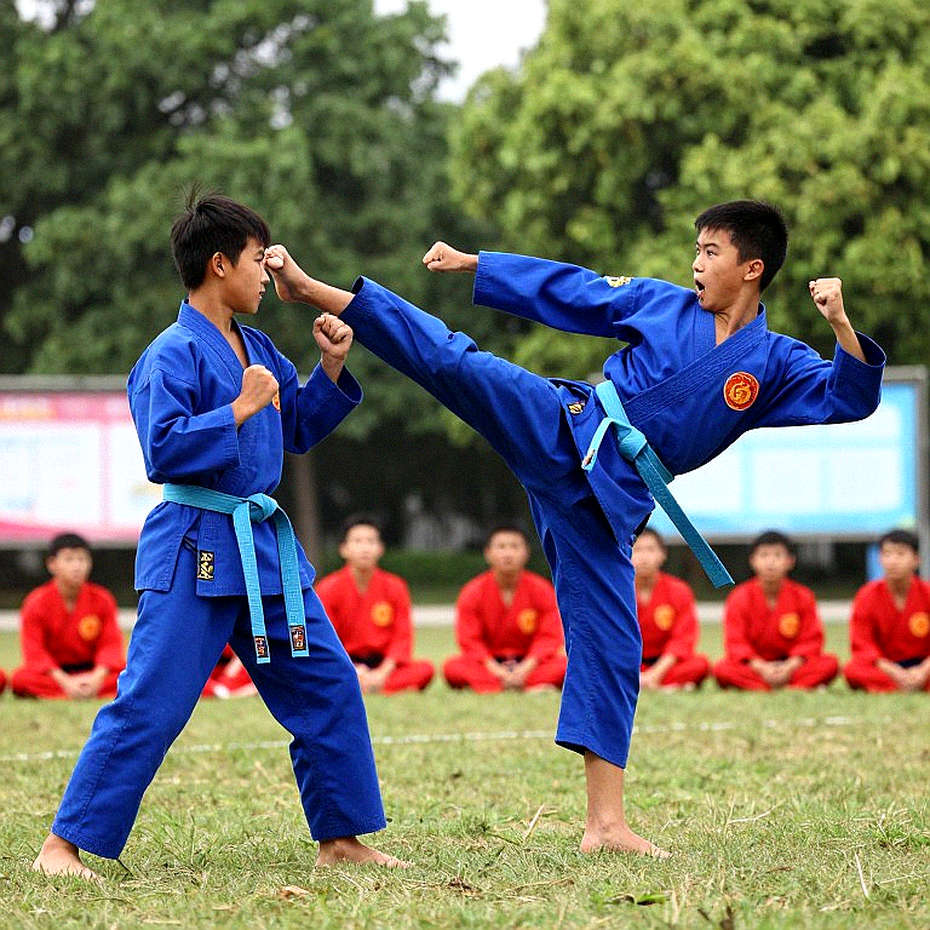
The first layer is traditional martial arts, including vovinam and dozens of schools with Vietnamese roots or Vietnamese adaptations. Scoring here rests on technical criteria, posture, and sometimes performance elements. The second layer is the Olympic and continental combat group: boxing, taekwondo, karate, judo, wushu, wrestling. This is where SEA Games and ASIAD medals and Olympic quotas are produced. The third layer is commercial professional combat: MMA and kickboxing, where revenue comes from tickets, broadcast rights, and sponsorship.
Those three layers have three rule sets, three evaluation standards, three money flows. On the sports pages, they usually occupy a single section: Martial Arts.
The 31st SEA Games held in Hanoi in 2026 made this misalignment obvious. Vovinam, as a host-nation sport, was one of the largest medal sources for the Vietnamese delegation. On an entirely different stage, Vietnamese boxing marked its presence through Olympic quotas, for example Vo Thi Kim Anh in the women's 54 kg division at Paris 2026. Both stories get called martial arts, yet they share not a single metric with each other.
Domestically, professional MMA has its own arena, with the Vietnam MMA Federation behind organisations such as LION Championship. That is where fighters have contracts, agents, and media coverage. It is also where statistics ought to exist.
The core: every deep analysis dies at the first decoding step
I picture a sports analysis workflow as a building. The first step is decoding raw data: who fought whom, when, under which rules, with what result, and which metrics were recorded. Without that step, everything above it is decoration.
In Vietnamese martial arts, that foundation is empty.
Based on my experience following fights at domestic arenas, I can list precisely what we do have: fight results, usually only as win or loss; fighter names, sometimes with amateur records; and a few lines of description in emotional language such as explosive, stubborn, courageous.

What we do not have is just as long. No strike accuracy rate. No takedowns landed against takedowns attempted. No control time. No pre-cut and post-cut weigh-in data. No publicly released scorecards from individual judges. No longitudinal injury records across a career.
In boxing, this gap is more severe, because it is a sport where scoring decides almost an entire career. A fighter wins three straight bouts on points, but nobody knows whether he won because he landed more or because his opponent was docked. His next contract will be negotiated on an empty data foundation.
In MMA, the problem takes a different shape. This is a sport where statistics are almost part of the product. Major international promotions publish per-round metrics, maintain ranking systems, and track injuries and layoff periods. The distance between international standards and domestic reality does not lie in fighter skill. It lies in recording infrastructure.
The business side suffers too. A sponsor asks one simple question: how many fights in this promotion finished before the time limit, and is that rate rising or falling across seasons. Nobody can answer, because nobody recorded it. A sponsorship deal can collapse for that reason, and it has nothing to do with the quality of the fighters in the cage.
First consequence: analysis gets replaced by inspiration
Without data, a writer must choose between two things: silence, or storytelling. Sports media always picks the second, and I understand why. But a story without metrics slides very easily into prejudice.

I once wrote a piece mocking an expensive transfer at a European football club, and the player's agent called me, laughed, and said that being criticised was precisely what released his client from pressure. I keep that detail, not because it is entertaining, but because it reminds me that a writer's judgement carries real weight. If it carries weight, it must be built on something firmer than a hunch.
A hot take is never the answer. It is a kick to make other people crave an argument. But for that kick to have force, I need to know what I am kicking. In Vietnamese martial arts, I often do not know, because the target is a blur.
Second consequence: blurred identity damages both policy and market
In data analysis templates, people use one common label, martial arts, to cover everything. That label is harmless when it is only a label. In Vietnam, it becomes a problem the moment it enters a meeting room.
Traditional martial arts live on state budgets, schools, and festivals. Olympic combat sports live on medal targets and priority investment funding. Professional combat lives on the market. Three different resource streams, three different definitions of success. Merged together, administrators easily apply one layer's criteria to judge another, and usually all three lose.
A vovinam athlete winning a medal at an international festival and an MMA fighter winning a professional bout cannot be judged by the same yardstick. But across many news items, they appear side by side as two symbols of the same rising Vietnamese martial tradition.
Third consequence: fans lose their tool for argument
This is the least discussed part. Sports debate is only healthy when both sides can look at the same metric. Without metrics, debate degrades into a shouting match about reputation: who is tougher, who has more heart, who deserves more. Those arguments never end, and they never raise anyone's understanding.
I need you furious before you agree. Because that is when you will actually listen. But if your fury has nowhere to land, my article is just noise.
The contrarian angle: maybe this gap is protecting someone
I have to argue against myself here, because this is the most error-prone spot.
Assumption one: more data is better. For traditional martial arts, that assumption fails. The criteria of vovinam or traditional schools are designed to measure what is hard to measure: precision of posture, maturity of technique, continuity of forms. Forcing a quantitative scoring system onto that can impoverish the very thing it means to preserve.
Assumption two: data transparency always serves fans. In professional combat, detailed statistics are also raw material for betting markets. A complete data system placed inside a loosely regulated market can turn fighters into priced assets rather than working professionals.
Assumption three: the data gap comes from laziness. I do not think so. A domestic promotion running on a tight budget hiring a full metrics crew for ten fights is a significant expense, while ticket and sponsorship revenue may not rise in proportion. The problem here is economic, not attitudinal.
But I keep my conclusion. The three assumptions above explain why the gap exists. They do not explain why it has lasted this long without anyone naming it.
What I am waiting for, and how to verify it
I am setting a verifiable marker.
Whichever domestic professional combat promotion publishes a complete post-fight statistical set, including strike accuracy, takedowns landed, control time, and every judge's scorecard, will be the first organisation to create a new layer of debate for Vietnamese audiences. I predict it happens within the next two seasons, because technology costs have fallen faster than sponsorship money has grown.
If nobody does it after two seasons, my hypothesis is wrong, and I will rewrite this very article. From a student blog, I learned that to make a big bang, you have to light the fuse yourself.
People remember me for the bang, but I remember myself for the bending down to write. Bending down this time means accepting one thing: what Vietnamese martial arts lacks most is not a talent, but a data layer thick enough for that talent to be seen exactly as it is.